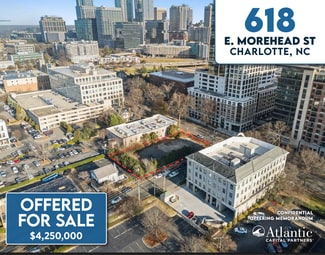
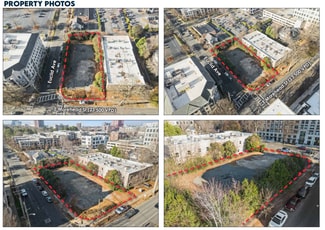
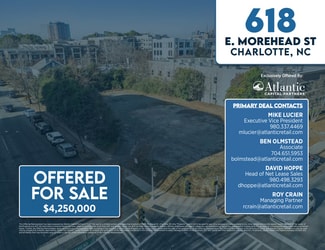
$4,250,000 USD

704-995-2850
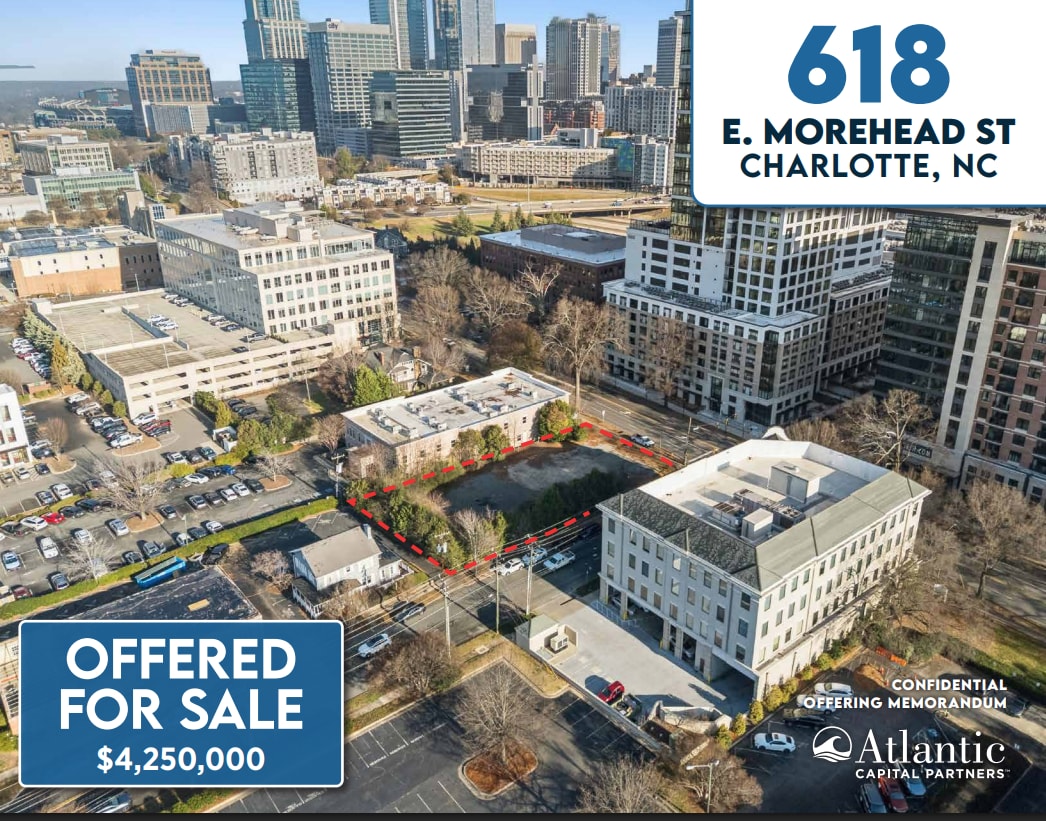

OVERVIEW
PREMIER EAST MOREHEAD URBAN CORRIDOR
- East Morehead Street serves as one of Charlotte’s primary east-west thoroughfares connecting Uptown, South End, Dilworth, and Myers Park
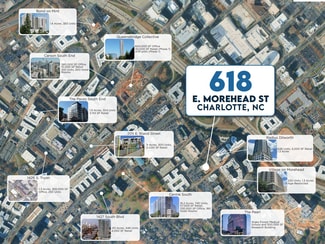
- Immediate proximity to Uptown Charlotte (±1.0 mile) and South End (±1.5 miles), two of the city’s largest employment and lifestyle hubs
- Corridor characterized by dense infill development & adaptive reuse projects
HIGH-BARRIER-TO-ENTRY INFILL LOCATION
- East Morehead Street is largely built out with limited remaining developable land due to historic neighborhoods, zoning constraints, and institutional ownership
- Scarcity of vacant parcels creates meaningful barriers to entry and supports long-term land value appreciation
- Replacement land opportunities within the corridor are extremely limited
DENSE AND AFFLUENT INFILL DEMOGRAPHICS
- 1-mile demographics include an Average Household Income exceeding $130,000 and a population of approximately 16,000+ residents
- Surrounding neighborhoods include Dilworth, Myers Park, and South End--Charlotte’s highest income submarkets
- Area supports a strong renter-by-choice and young urban professional population base
FLEXIBLE DEVELOPMENT POTENTIAL
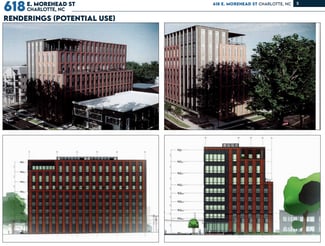
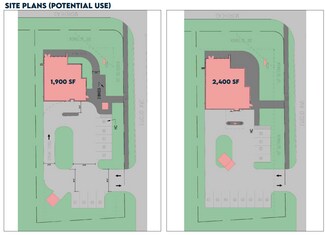
- NC zoning is intended for neighborhood centers allowing for a wide range of uses
- Developers can pursue up to roughly 4–5 (potentially 6) stories, medical office, professional office, boutique hotel (with conditions), retail/restaurant, and residential over retail
- Recent residential development across the street
RETAIL, DINING & LIFESTYLE AMENITY CONCENTRATION
- Over 2 million SF of retail space within a 1-mile radius
- Nearby amenities include South End dining, Dilworth neighborhood retail, Freedom Park, and the Little Sugar Creek Greenway
- Area consistently ranks among Charlotte’s most walkable and amenity-rich urban environments
A TOP PERFORMING MARKET NATIONALLY
- Charlotte MSA has added more than 215K people from 2020 to 2024, making it the 5th fastest growing city in the country
- The Charlotte, NC region is expected to add 1.5 million residents and reach 4.5M by 2050
FOR SALE DETAILS
PRICE
$4,250,000 USD
PRICE/ACRE
$9,883,721/AC
PRICE/SF
$227 USD /SF
# OF LOTS
-
LAND DETAILS
PROPERTY TYPE
Land
PROPERTY SUBTYPE
Commercial
LAND PROPOSED USE
-
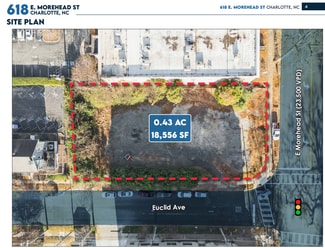
LAND ACRES
0.43 AC
LAND SF
18,731 SF
OFFSITE IMPROVEMENTS
-
ZONING
NC
APN/PARCEL ID
123-023-08
ASK ABOUT THIS PROPERTY
Please correct the highlighted field(s).

704-995-2850
By clicking the button, you agree to Showcase's Terms of Use and Privacy Notice.
Please correct the highlighted field(s).
704-995-2850
By clicking the button, you agree to Showcase's Terms of Use and Privacy Notice.