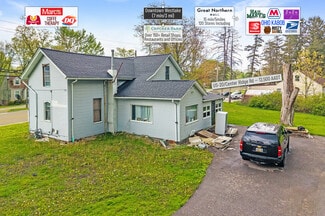
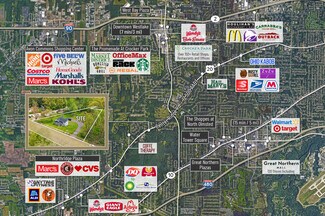
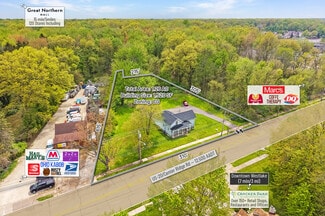
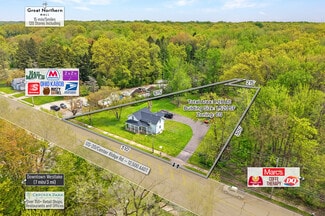
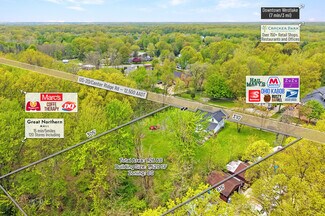
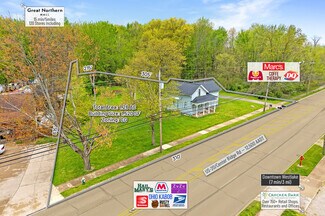
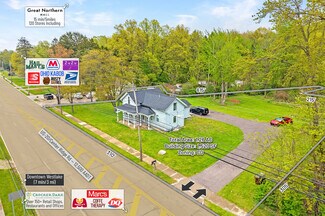
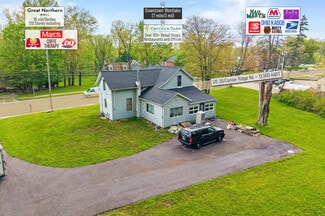
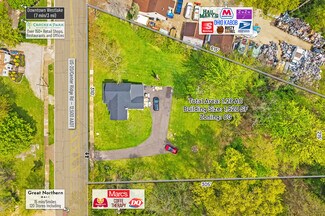
30661 Center Ridge Rd - Commercial LAND FOR SALE
Westlake, OH 44145 |
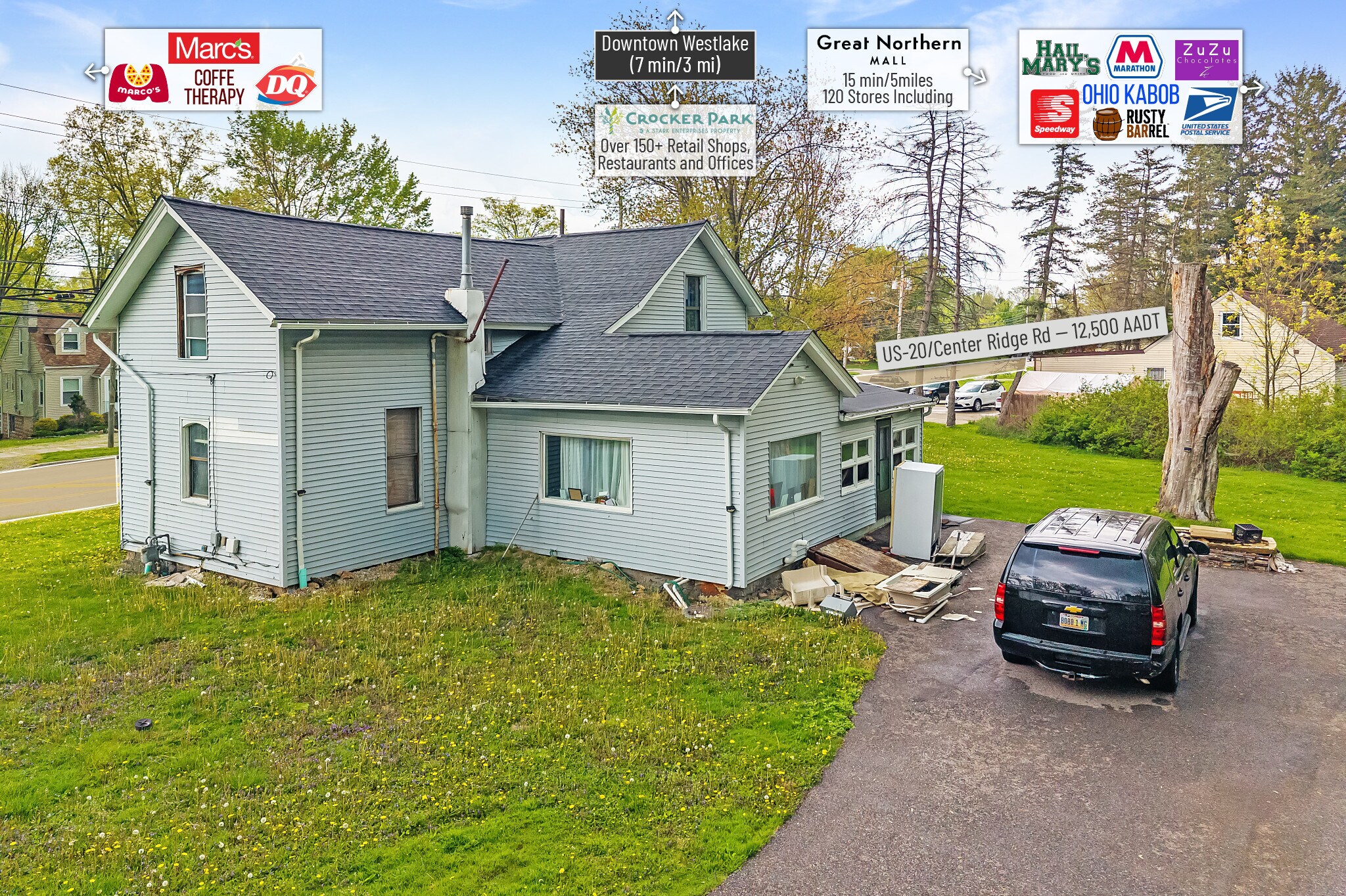
30661 Center Ridge Rd
Westlake, OH 44145

OVERVIEW
The area also hosts numerous medical offices, banks, and service-oriented businesses, contributing to a vibrant commercial environment. Surrounding Communities & Proximity
Westlake is bordered by several communities:?
Bay Village: Approximately 3 miles north.?
North Olmsted: Approximately 4 miles south.?
Rocky River: Approximately 5 miles east.?
Avon: Approximately 6 miles west.?
These neighboring cities contribute to the regional economy and provide additional residential and commercial opportunities.
Why Choose Westlake, Ohio As Your Next Commercial Real Estate Development Opportunity?
Westlake, Ohio—nestled in the heart of Cuyahoga County and strategically positioned within the Cleveland Metropolitan Statistical Area (MSA)—offers a highly compelling landscape for commercial real estate development. Recognized for its robust economic fundamentals, pro-business environment, and diverse real estate inventory, Westlake continues to attract significant private and institutional investment. With convenient access to key transportation routes, a highly educated workforce, and close proximity to downtown Cleveland, the area is uniquely positioned for sustained commercial growth.
As one of the western suburbs of Cleveland, Westlake balances suburban appeal with metropolitan access, making it ideal for office parks, mixed-use developments, hospitality projects, and medical or light industrial facilities. Anchored by signature developments such as Crocker Park and bolstered by the presence of national employers like Hyland Software, the city maintains steady growth in both occupancy rates and property values. The broader Cleveland MSA amplifies these advantages by offering significant tax incentives, strategic connectivity, and a growing reputation as a viable alternative to higher-cost urban markets.
Commercial Market Overview
Westlake is a flourishing commercial corridor with over 4 million square feet of combined office, retail, and industrial space. Its commercial development has evolved through strategic master planning and private-public partnerships, leading to sustainable, high-utility growth. Major projects such as the $500M Crocker Park have transformed the landscape, integrating retail, office, entertainment, and luxury residential units in a walkable urban environment that draws millions annually.
Commercial Inventory Highlights:
Office Space: 1.84M SF across 25 buildings
Retail Space: 1.6M+ SF, anchored by Crocker Park
Industrial Space: 824,000 SF and growing
Key Metrics For Westlake’s commercial real estate continues to outperform many suburban markets due to:
Proximity to I-90 and I-480
Access to Cleveland Hopkins International Airport (10 miles)
Affluent residential base with median household incomes above $90,000
Strong local leadership and pro-growth zoning policies
Recent Activity & Momentum
Premier Development Partners purchased two Hyland Software buildings (200,000 SF) for $6.25M in late 2024, signaling long-term confidence in the market’s office viability.
Lake Forest Subdivision development launched with 34 residential lots on 26 acres—demonstrating investor interest in blending residential with nearby commercial hubs.
New mixed-use and medical office projects along Center Ridge Road and Detroit Road reflect growing demand for healthcare, flexible office, and retail services in live-work-play environments.
Westlake Commercial Real Estate Development & Growth
Diverse Asset Class Performance
Westlake boasts a comprehensive mix of commercial real estate assets:
Office Space: Approximately 1.84 million square feet across 25 buildings, catering to various business needs.
Retail Space: Around 1.6 million square feet, including prominent centers like Crocker Park, a 120-acre mixed-use development featuring over 100 retailers, dining options, and residential units.
Industrial Space: Approximately 824,000 square feet, supporting manufacturing and logistics operations.
Market Trends
The Westlake real estate market demonstrates healthy activity across various price points. For properties between $300,000 to $600,000, the median sold price is approximately $489,900, with a median of 28 days on the market, suggesting a balanced and active market.
Advantages of Building in the Cleveland MSA
Strategic Location & Accessibility
Cleveland's central location places nearly 50% of the U.S. population within a 500-mile radius, offering unparalleled access to major markets. ?
Economic Incentives
Ohio ranks third nationally for commercial real estate development, contributing $64 billion to the state's GDP and supporting over 424,000 jobs in 2022. Developers benefit from various incentives, including tax credits and financing programs.
Emerging Market Recognition
Cleveland's real estate market is gaining national attention, ranking among the top 25 in the U.S. for demand and growth. Factors such as rising demand across sectors, a strong job market, and affordable living contribute to this trend.
Sustainability and Innovation
The region emphasizes sustainable and innovative development, offering affordable, green, and technologically advanced living spaces without the high costs associated with larger metropolitan areas.
Strategic Market Access
Cleveland MSA offers unmatched logistical and distribution advantages:
Nearly 50% of the U.S. population lives within 500 miles
Access to major interstates (I-71, I-77, I-80, I-90)
Immediate proximity to Great Lakes ports, Class I rail lines, and Cleveland Hopkins International Airport
Economic Growth & Incentives
Ohio ranked #3 nationally for commercial real estate investment (2022) contributing $64 billion to state GDP. Cleveland offers:
Opportunity Zones
Tax Increment Financing (TIF)
Job Creation Tax Credits
New Market Tax Credits
Competitive utility rates and affordable construction costs
Rising National Recognition
Cleveland is increasingly viewed as a high-potential growth market:
Top 25 U.S. real estate markets for growth and demand
National attention for affordable Class A space
Medical sector dominance with Cleveland Clinic, University Hospitals, and MetroHealth driving commercial office, R&D, and tech spaces
Talent and Workforce
Cleveland boasts a skilled and educated workforce supported by:
Case Western Reserve University
Cleveland State University
Tri-C Community College
Robust tech and health sciences sectors
Quality of Life & Sustainability
Cost of living ~23% lower than national average
Focus on green building and sustainable urbanism
Abundant parks, lakefront access, and revitalized downtown districts enhance liveability and long-term tenant retention
FOR SALE DETAILS
PRICE
-
# OF LOTS
-
LAND DETAILS
PROPERTY NAME
Prime Land Development Opportunity
PROPERTY TYPE
Land
PROPERTY SUBTYPE
Commercial
LAND PROPOSED USE
Commercial, Office, Multi-Family, Medical
LAND ACRES
-
LAND SF
-
OFFSITE IMPROVEMENTS
-
ZONING
-
APN/PARCEL ID
271-21-001